The workflow had to stay boring. People already know kanban; making
them learn a new paradigm to get AI value is a tax most won't pay.
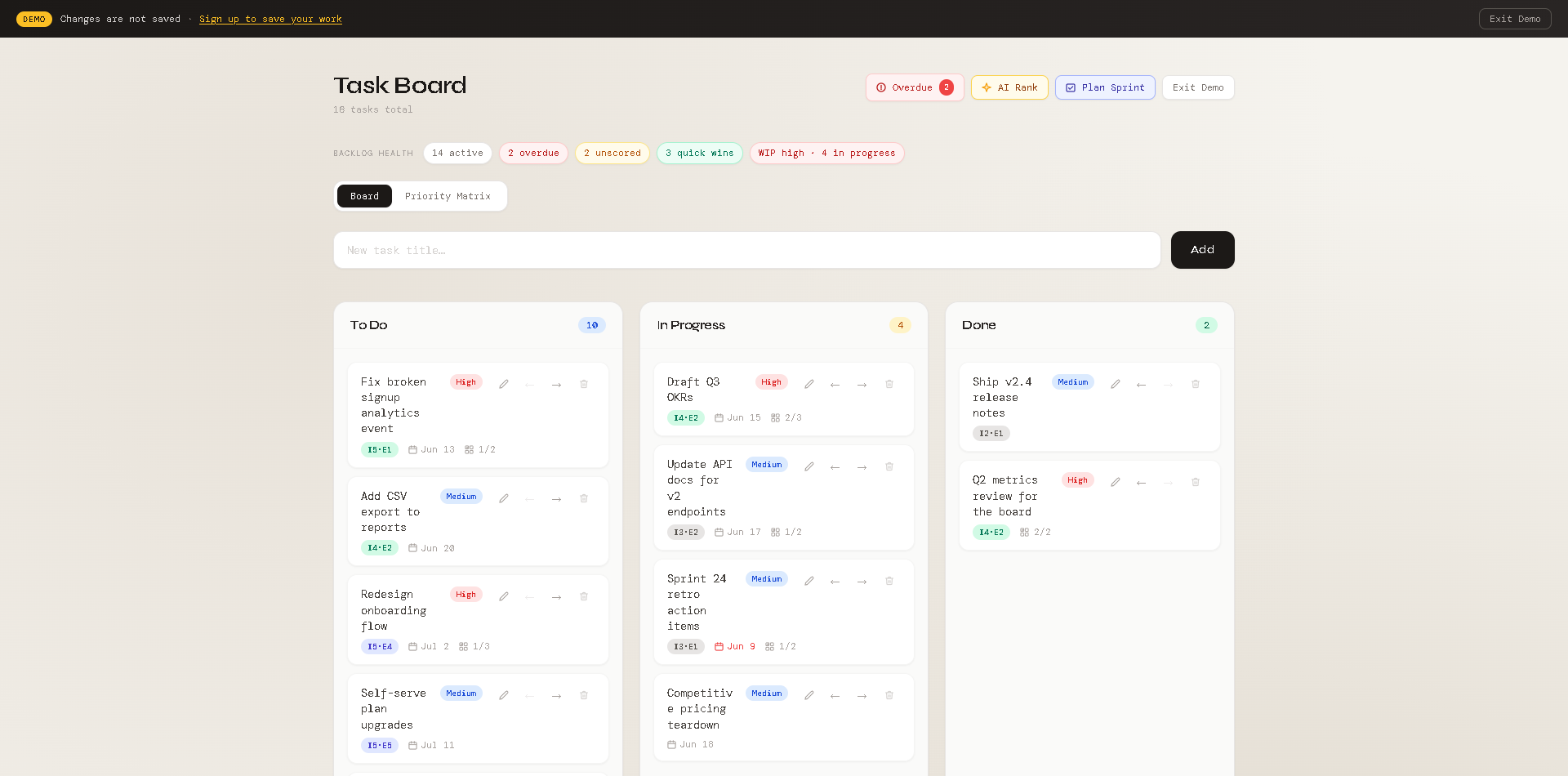
So the board itself is deliberately conventional, and the planning
layer scoring, the matrix, ranked analysis, sprint plans is
optional and summonable, never in the way of moving
a card.
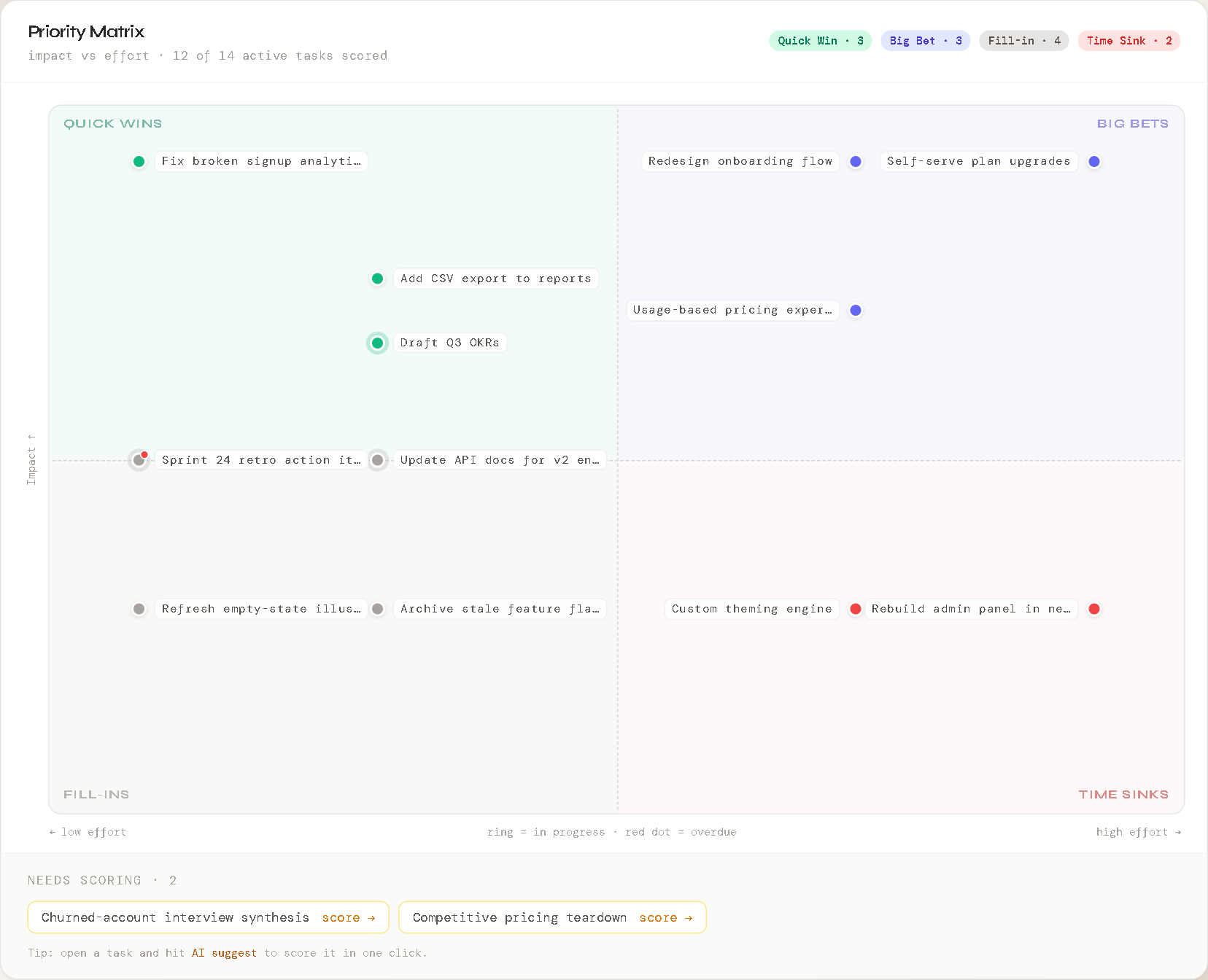
Prioritization needed a framework, not vibes, but a cheap one.
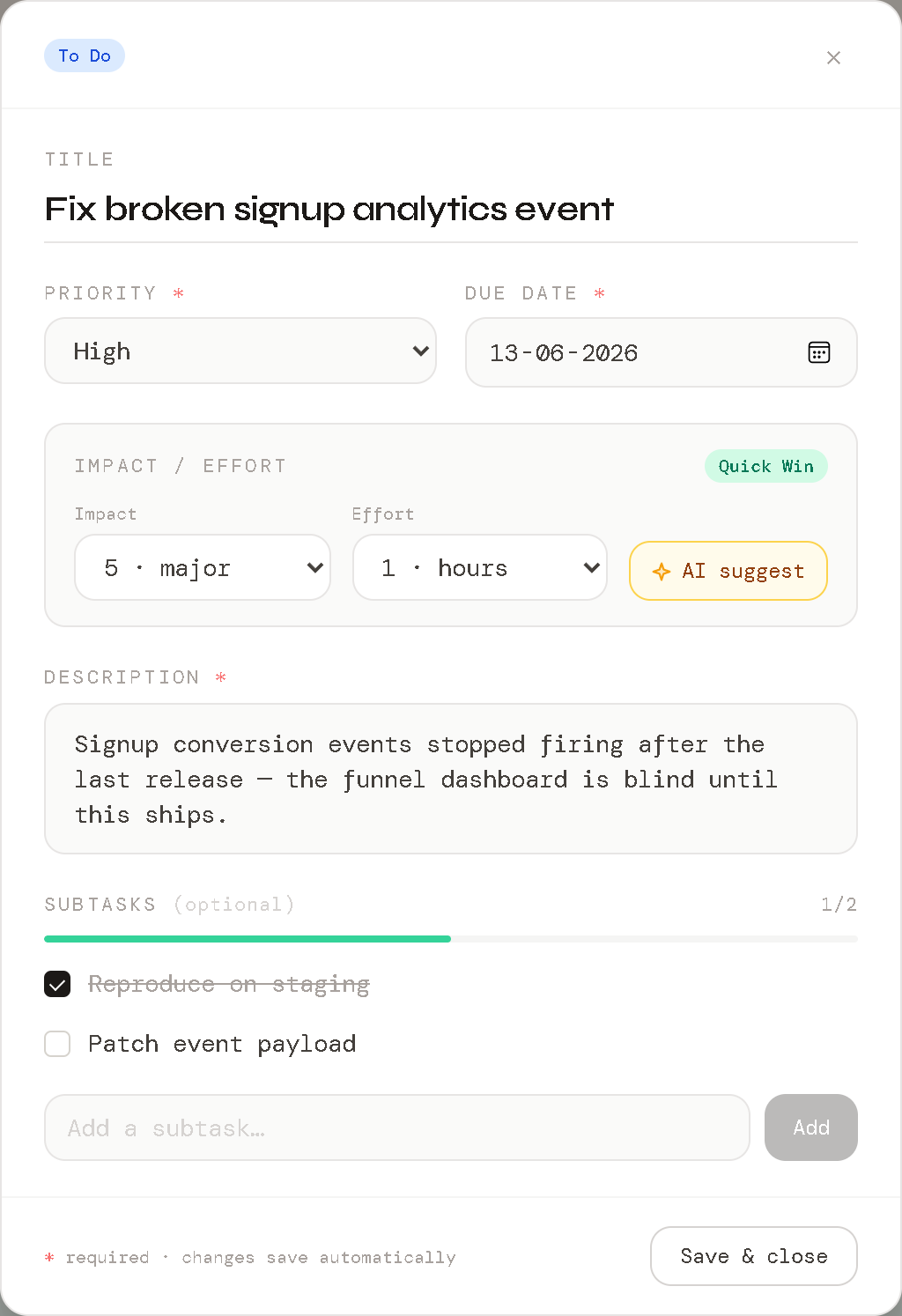
Impact and effort (1 to 5 each) are the two fields a PM can score in
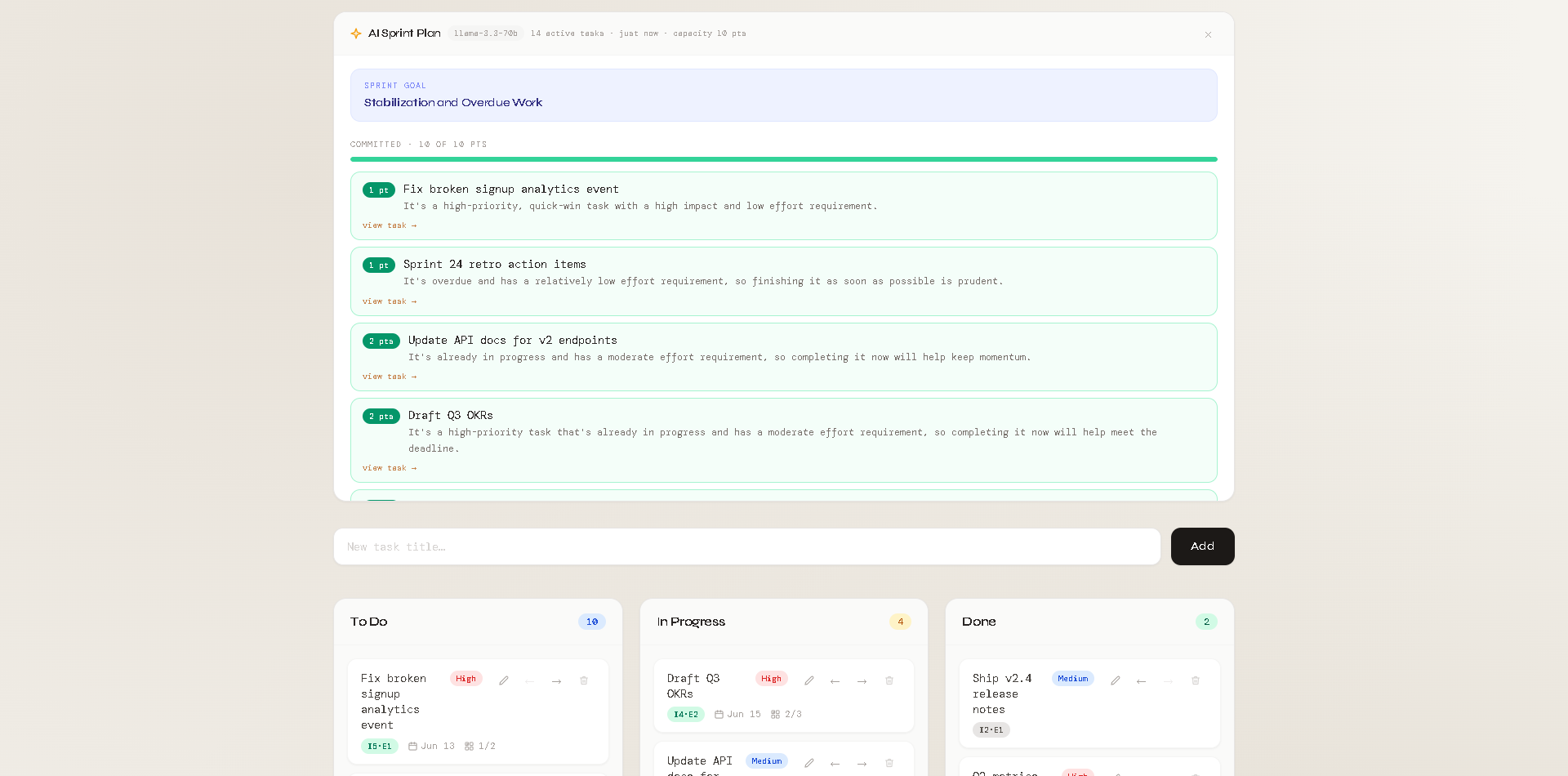
seconds and an AI can suggest defensibly; together they're enough to
drive the matrix, the value conversation, and the sprint budget.
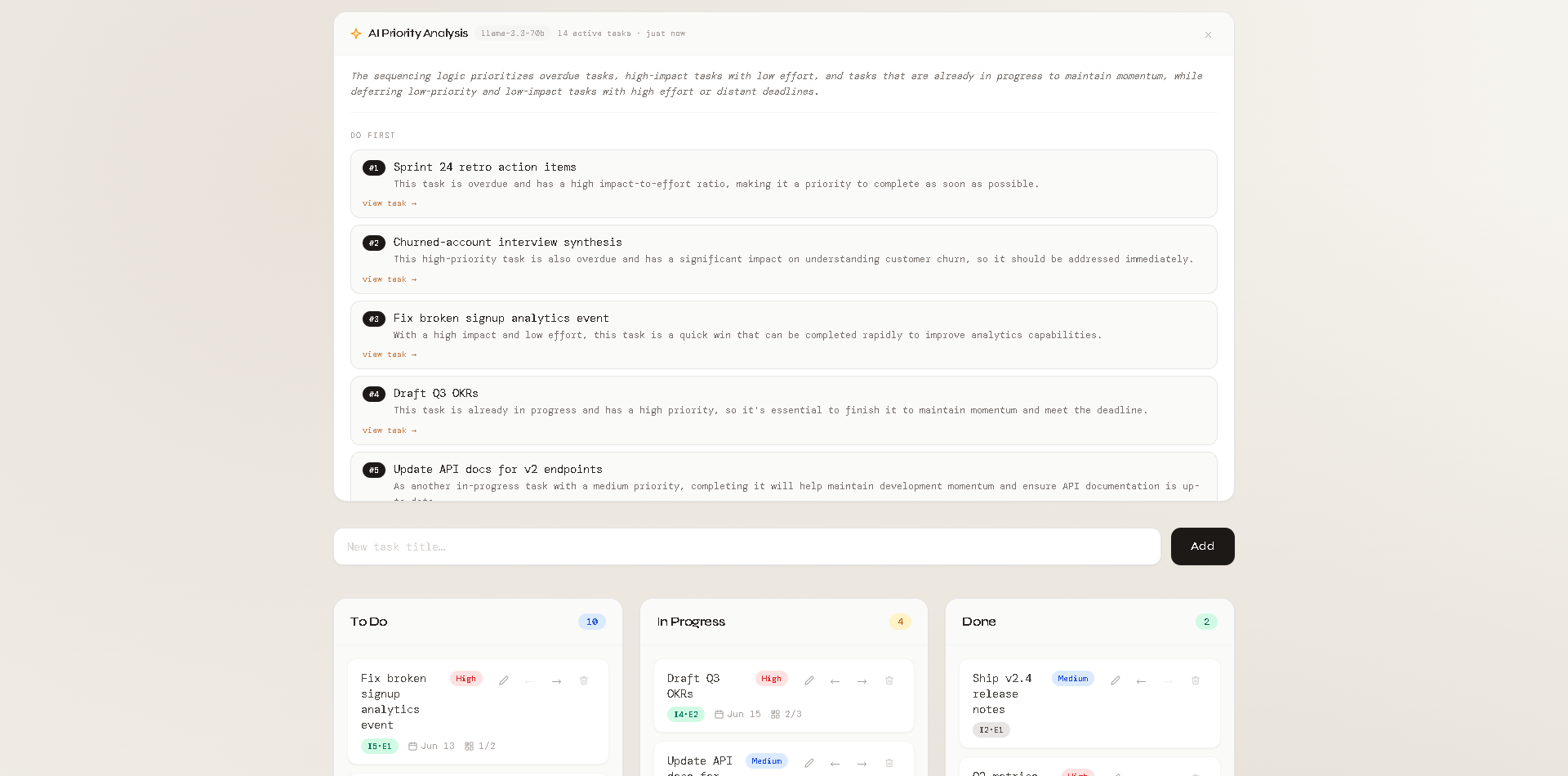
The second principle: the AI reads everything but writes nothing. It
ranks and explains; the user moves cards. Small contextual nudges close
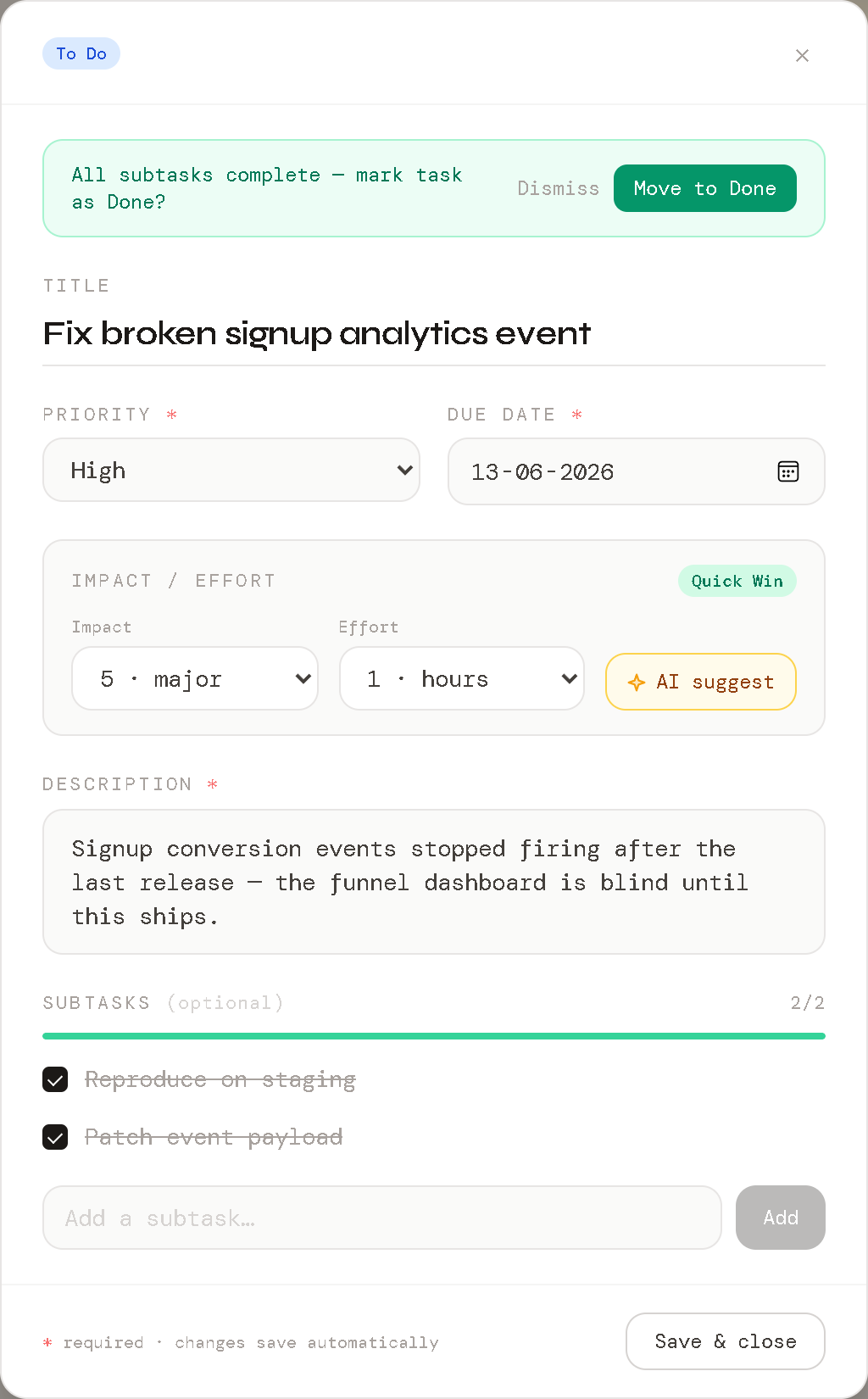
the loop instead when every subtask on a card is checked, the product
asks one question: "All subtasks complete, mark task as
Done?" One tap, user in control.
Subtask progress (1/2, 4/4) was added specifically as model input:
a task that's 80% done and overdue should rank differently from one
that's untouched and overdue, and the model can only know that if the
data structure carries it.